Verified market guide · Updated July 2026
Robot companion brands that have a real product path
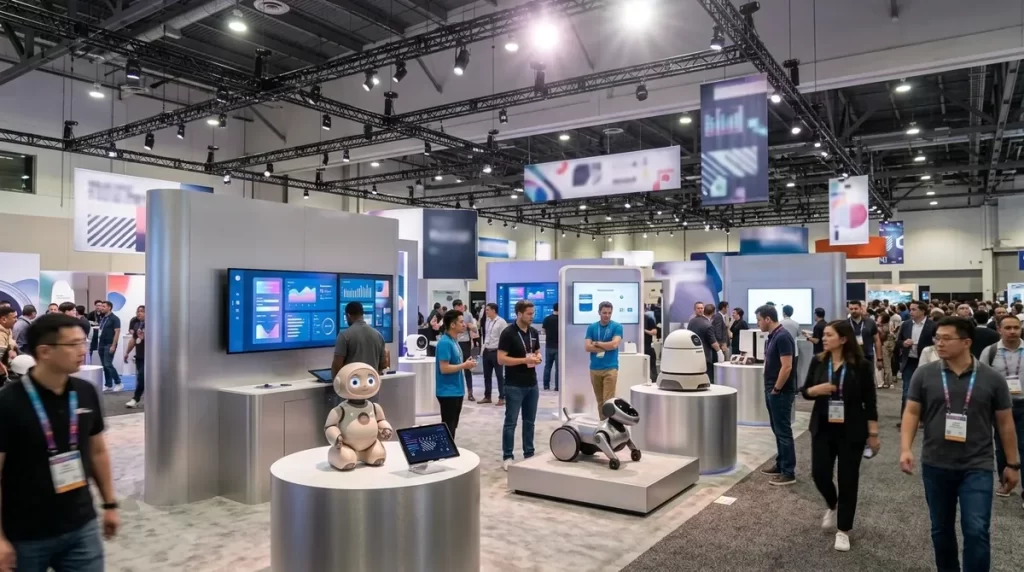
The companion-robot market is not led by imaginary home versions of industrial machines. It is a small, fragmented group of robot pets, desktop characters and audience-specific systems with very different prices, regions, subscriptions and privacy models.
4 formatsMobile, desktop, handheld and stationary
$139–$3,199+Observed consumer hardware range
No fake scoresCompared by evidence and ownership fit
Quick answer
Which robot companion brands are worth comparing?
There is no single best robot brand because a $140 stationary desk character and a $3,200 autonomous robot dog do not solve the same problem. Start with the desired interaction, then compare companies inside that category.
Sony
Product: aibo ERS-1000
Best-established premium robot-dog ecosystem in the U.S., with sophisticated movement and an ongoing cloud plan.
Casio
Product: Moflin
Fur-covered, low-motion companion built around touch, sound and locally processed emotional behavior.
GROOVE X
Product: LOVOT 2.0 and 3.0
Premium Japanese wheeled companion designed for holding, eye contact and long-term interaction rather than chores.
KEYi Tech
Product: Loona
Wheeled robot pet with navigation, gestures, camera features and conversational AI at a lower entry price.
LivingAI
Products: EMO and AIBI
Character-first small robots for desks or portable use, with active official sales and accessories.
Energize Lab
Product: Eilik
Low-cost stationary companion focused on animations, touch reactions and multi-unit play.
Intuition Robotics
Product: ElliQ
Stationary voice companion leased through a U.S. membership for older adults living independently.
Miko
Product: Miko 3
Screen-faced educational robot designed for children ages 5–10, with free core features and optional premium content.
A brand name is not a guarantee of fit. Sony has deeper consumer-electronics infrastructure than a startup, but aibo can still be the wrong choice for a child, an offline home or a limited budget. A smaller company can offer the right format while presenting greater repair, shipping or long-term service risk.
Side-by-side
Robot companion brand comparison for 2026
Prices below are snapshots of official pages where a public figure was available. They exclude tax, import duty, optional accessories and future price changes. “No required subscription found” means the brand currently markets core use without a mandatory recurring plan; it does not promise that every AI feature will remain free forever.
| Brand and product | Format | Official price model observed | Best fit | Main ownership caution |
|---|---|---|---|---|
| Sony aibo | Autonomous legged robot dog | U.S. $3,199.99; three cloud years included; current renewal $300/year | Premium movement and long-term robot-pet behavior | Final sale, regional restrictions and cloud dependence |
| Casio Moflin | Handheld fur-covered companion | Sold through Casio’s U.S. e-commerce site; verify live checkout price | Quiet touch-based interaction and portability | Minimal movement, fabric care and narrower feature set |
| GROOVE X LOVOT | Warm wheeled home companion | Japan: LOVOT 3.0 from ¥577,500 plus plan from ¥9,900/month | Physical presence, holding and expressive interaction | Japan-focused purchase/support and high recurring cost |
| KEYi Tech Loona | Wheeled robot pet | Official 2026 guide listed $499.90 promotional price; no required monthly plan advertised | Mobile play and camera/conversation features below premium prices | Confirm return, repair and future cloud-AI terms |
| LivingAI EMO / AIBI | Walking desktop or pocket character | EMO $289; EMO Go Home $379; AIBI $249 on official store snapshot | Small character robot and collectible ecosystem | International fulfillment and online-service longevity |
| Energize Lab Eilik | Stationary desktop character | $139.99 promotional price; duties and local charges excluded | Affordable animated desk companion | No room navigation and limited open-ended assistance |
| Intuition Robotics ElliQ | Stationary voice-and-screen system | Leased membership; $249 initiation fee, with current annual-plan page showing $29.99/month paid upfront | Older adults seeking routines, conversation and family connection | Not owned outright; ongoing membership and U.S.-focused service |
| Miko 3 | Wheeled screen-based children’s robot | Hardware price varies; optional Miko Max listed at $99/year or $14.99 per 30 days | Supervised learning and entertainment for ages 5–10 | Children’s privacy, premium-content upsell and parent oversight |
Company profiles
What each brand does well—and what to verify
Sony: aibo ERS-1000
United States storefront active · Japanese ERS-1000 sales ending after inventory
Sony offers the most mechanically sophisticated consumer companion in this shortlist. aibo walks on articulated legs, responds to touch and voice, recognizes environmental features, takes photos and uses connected services to develop patterns over time. Sony maintains detailed documentation, app updates, parts and support resources.
The purchase is unusually consequential: Sony’s U.S. page lists $3,199.99, includes three years of the AI Cloud Plan and describes the unit as final sale. The current U.S. renewal is $300 per year. Sony also restricts sale and use in Illinois and Baltimore, while Japan announced the end of domestic ERS-1000 sales after stock runs out.
Casio: Moflin
Official U.S. sales and support path verified
Moflin is deliberately simpler than aibo or Loona. It is a 260-gram fur-covered companion with two axes of head movement, touch and motion sensing, a microphone and speaker. Casio describes up to five hours of use and a roughly 3.5-hour charge. The experience emphasizes being held, stroked and spoken near rather than following users around a room.
Casio says voice-feature processing used for owner recognition occurs locally and that Moflin does not understand or record speech. Data can be uploaded through the MofLife app with user choice for journal, service and restoration functions. The official U.S. page lists a one-year warranty and repair support.
GROOVE X: LOVOT
Active Japanese product line · LOVOT 2.0 and 3.0
GROOVE X builds only LOVOT, a wheeled companion designed around warmth, eye contact, touch and a “slow relationship” rather than utility. Its sensor horn, touch-rich body, animated eyes and warmed surface support a distinct physical experience. Cloud updates and the app add diary and monitoring functions.
The current Japanese store lists LOVOT 3.0 from ¥577,500 and LOVOT 2.0 from ¥449,900. A required living-cost plan starts at ¥9,900 per month, with higher plans adding coverage. Those figures make LOVOT one of the most expensive ongoing commitments in the consumer category.
KEYi Tech: Loona
Official direct sales and 2026 buying documentation active
Loona occupies the space between desktop toys and premium robot pets. It moves on wheels, uses cameras and ranging sensors, responds to gestures and voice, can patrol or provide a camera view and integrates conversational AI. KEYi’s own 2026 guide lists a promotional $499.90 price and says no mandatory monthly subscription is required for core smart features.
That capability-to-price ratio is attractive, but it increases the importance of practical due diligence. Moving parts, charging-dock access, cloud AI, app permissions and cross-border service all affect long-term value. Marketing references to a model provider do not guarantee indefinite access to that provider or feature.
LivingAI: EMO and AIBI
Active official storefront with robots, stations and accessories
LivingAI focuses on small character robots. EMO is a walking desktop pet with an animated face, sounds and desk-scale interactions. EMO Go Home adds a self-charging station. AIBI is a smaller portable character. The official store snapshot showed EMO at $289, EMO Go Home at $379 and AIBI at $249.
These products suit buyers who want a visible personality on a desk without clearing an entire room. They are still connected electronics: fulfillment, app access, servers, firmware and battery replacement matter. “AI pet” describes the interaction design, not sentience or a guarantee of accurate conversation.
Energize Lab: Eilik
Active official store · Low-cost stationary format
Eilik is the lowest-cost device in this shortlist. It stays on a desk and creates character through screen animation, sound, vibration and touch reactions. Multiple Eilik units can interact. The official store listed a $139.99 promotional price against a $149.99 regular price and warns that customs duty, taxes and country-specific charges are not included.
Eilik’s limits are part of its appeal: there is no room mapping, patrol or self-docking system to maintain. It is closer to an interactive character object than a general assistant. Buyers expecting open-ended conversation or practical tasks should choose another category.
Intuition Robotics: ElliQ
U.S. lease membership · Device is not purchased outright
ElliQ is a stationary voice-and-screen companion designed with older adults in mind. It offers conversation, routines, games, wellness prompts and ways to connect with family. The business model differs from hardware ownership: Intuition Robotics says ElliQ is leased through a membership that includes the device, software, updates, warranty and weekday support.
The current FAQ lists a one-time $249 lease-initiation fee. A current product page shows an annual membership equivalent to $29.99 per month paid upfront, but buyers should verify the exact offer at enrollment. ElliQ is not an emergency alert, medical diagnosis or replacement for human care.
Miko: Miko 3
Designed for ages 5–10 · Optional premium content
Miko 3 is a small wheeled robot with a screen face, voice interaction, games, stories and educational content. Miko’s current support material identifies children ages 5–10 as the intended audience. Core questions, commands and a curated library work without Miko Max; the optional subscription adds branded and premium content.
Miko’s help center listed Max at $99 per year or $14.99 per 30 days in October 2025 and warns that price varies by country. For any connected children’s robot, parental controls, microphone data, profile settings, content quality and subscription renewal deserve more attention than novelty.
Fact check
Why famous robotics names are not automatically companion brands
The old version of this article presented corporate research programs and industrial robots as home products. A recognizable logo is not evidence that a consumer companion exists. We excluded a name when we could not verify a current purchase, lease or supported distribution path for a relevant product.
Spot is an industrial platform
It is not a “Spot Home Edition,” pet substitute or ordinary household companion. Atlas is a research/development humanoid, not an “Atlas Personal” product.
ASIMO heritage is not a current catalog
Research leadership does not create retail products named “ASIMO Care,” “Honda Companion Pro” or “P-Series Personal Assistant.”
Business and education require separate evaluation
NAO and Pepper deployments are not equivalent to a simple consumer robot-pet purchase with a universal public price and home warranty.
Availability must be proven today
A past product, prototype, campaign or revived trademark does not qualify without a current official order path, service terms and support contact.
Clinical and institutional robots are a different market
PARO, NAO and other socially assistive platforms may be used by healthcare, research or education organizations. Procurement should evaluate the exact indication, evidence, training, service contract, privacy obligations and institutional workflow. Consumer availability does not establish therapeutic effectiveness, and a clinical deployment does not make a robot an appropriate home purchase.
Buyer framework
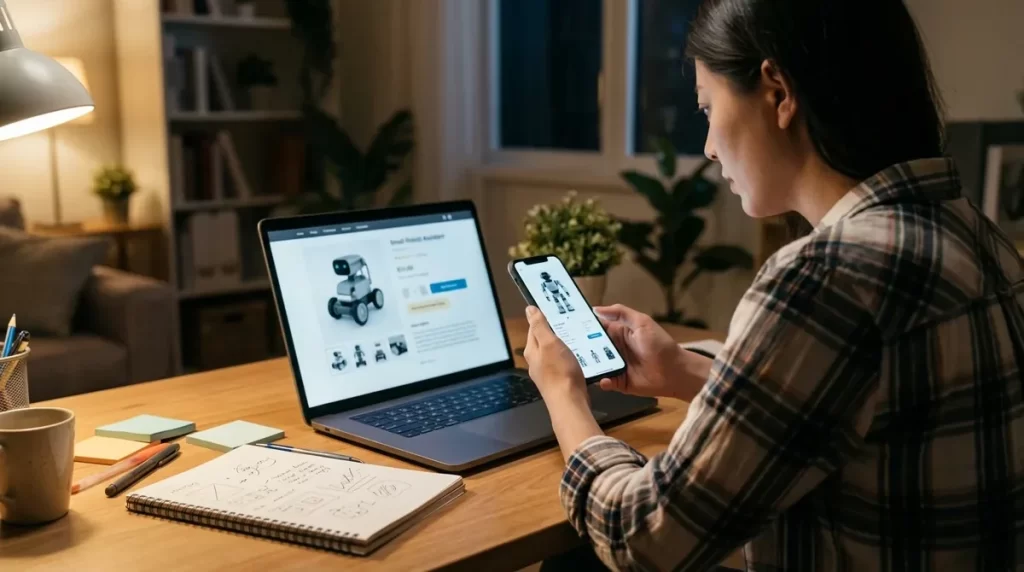
How to choose a robot brand without relying on hype
- 01
Define the interaction
Choose among room movement, desk character, soft handheld pet, voice service or children’s learning. Do not start with a logo.
- 02
Confirm the country
Verify official sale, app availability, language, wireless bands, payment, warranty and repair service in the place where the robot will be used.
- 03
Calculate three- and five-year cost
Add mandatory plans, premium content, shipping, tax, duty, accessories, battery service and the likely cost of sending the robot for repair.
- 04
Map cloud dependence
Ask which actions happen locally, which require the vendor’s servers and what remains if a plan expires or the company changes the service.
- 05
Read the privacy policy by sensor
List cameras, microphones, facial analysis, room maps, child profiles and health-related data. Obtain household and guest consent where necessary.
- 06
Test support before buying
Ask a specific pre-sale question about replacement batteries or repair location. A clear written answer is stronger evidence than a generic “24/7 support” badge.
- 07
Inspect return terms
A demonstration, rental, trial or normal return window is especially valuable for products whose emotional appeal and daily novelty cannot be judged from a video.
- 08
Reject medical and emotional guarantees
Companion behavior can be pleasant without treating loneliness, anxiety, depression, dementia or another condition. Demand evidence for the exact product and use.
Compare Sony, LOVOT and Loona
Then separate legged realism, warm social presence and lower-cost wheeled play.
Compare EMO and Eilik
Decide whether walking, self-charging and a larger connected ecosystem justify the difference.
Compare Moflin and LOVOT
One is light and handheld; the other is mobile, heated, far more expensive and region-constrained.
Compare services, not mascots
ElliQ and Miko target defined audiences. Accessibility, supervision and content matter more than cuteness.
Frequently asked questions
Robot companion brand FAQ
What is the best robot companion brand in 2026?
There is no universal winner. Sony is the strongest premium robot-dog candidate in its supported U.S. region; Casio emphasizes soft handheld interaction; LOVOT emphasizes warm physical presence; Loona offers mobile features at a lower price; EMO and Eilik serve the desk; ElliQ and Miko target specific audiences.
Which brand makes the cheapest verified companion robot?
Among the eight brands compared here, Energize Lab’s official store showed Eilik at a promotional $139.99. Tax, duty and shipping can change the landed price. A low-cost desktop character is not equivalent to a room-roaming robot pet.
Which robot brands do not require a subscription?
Eilik, Moflin, LivingAI’s hardware and Loona are marketed with usable core experiences without the mandatory membership models used by aibo after its included period, LOVOT and ElliQ. However, apps and online AI can still depend on vendor services. Verify the exact current feature terms before buying.
Which brand is best for privacy?
No brand earns that label from a short feature list. Casio says Moflin processes owner-recognition voice features locally and has no camera, which reduces some exposure. Other products may use cameras, room maps, child profiles or cloud voice services. Compare the current privacy policy and settings for the exact model.
Are Boston Dynamics and Honda top home-companion brands?
They are important robotics companies, but we could not verify the fictional home products previously listed in this article. Industrial, automotive and research achievements should not be converted into a consumer buying recommendation.
Is a large company always safer than a startup?
A larger company may offer broader documentation, service infrastructure and financial durability. It may also impose regional restrictions, final-sale terms or subscription dependence. Evaluate the exact contract and support route rather than the company logo alone.
Should I buy a robot through a marketplace?
Only when the seller is authorized and the manufacturer confirms warranty, account activation and regional service. Marketplace savings can disappear if the device is imported, previously registered, missing a product key or must be shipped internationally for repair.
How often should this brand list be updated?
At least every six months and whenever a major model, price, plan or regional announcement changes. Companion robots depend on small product lines and cloud services, so stale buying advice becomes risky quickly.
Bottom line
Choose the ecosystem you can support, not the brand with the loudest claims
The strongest 2026 shortlist is diverse because companion robotics is not one market. Sony, Casio and GROOVE X sell very different forms of physical attachment; KEYi, LivingAI and Energize Lab compete on accessible character experiences; Intuition Robotics and Miko sell audience-specific services.
A professional comparison stops where evidence stops. Verify the live product page, recurring cost, region, privacy policy and repair path on the day you buy. If any of those remain unclear, the right brand is the one you postpone purchasing.
Official sources and price-check date
- Sony Electronics: aibo ERS-1000 and AI Cloud Plan.
- Casio Moflin U.S. product and support information.
- GROOVE X company and LOVOT overview and official Japanese purchase configurator.
- KEYi Tech: 2026 Loona price guide.
- LivingAI official store.
- Energize Lab official Eilik store page.
- ElliQ membership FAQ and 2026 terms of use.
- Miko 3 product explanation, free versus Max features and subscription pricing.
Products, prices and commercial status checked July 13, 2026. Prices are snapshots, not guarantees. Official checkout pages and contracts control.